and the primary cause is not technical inadequacy but a lack of clinical adoption.
A founder's greatest strength can become their company's biggest strategic risk
as their expertise creates biases and blind spots regarding other critical aspects of the business.
The healthcare system is inherently risk-averse and resistant to change
successful innovation requires seamlessly integrating into established clinical workflows rather than disrupting them.
Succeeding in MedTech is a 'team sport' that requires building a team of advisors with diverse...
Succeeding in MedTech is a 'team sport' that requires building a team of advisors with diverse expertise to navigate the complex ecosystem of stakeholders, regulations, and market dynamics.
Clinical adoption is the biggest hurdle
accounting for about 40% of failures, followed by a lack of fundability, which causes about 30% of failures.
Trust your intuition; a 'funny feeling' or 'red flag' about a potential partner
employee, or situation is often a valid warning sign that shouldn't be rationalized away.
Effective MedTech solutions should function as clinical support systems that enhance the natural...
Effective MedTech solutions should function as clinical support systems that enhance the natural decision-making process, rather than simply being a digital version of an old paper-based process.
Founders must be authentic and openly communicate their values to attract the right people—employees
partners, and investors—who resonate with their mission and can contribute to a sustainable business.
Episode Summary
In this episode of The Med Device Cyber Podcast, host Christian Espinosa is joined by guest Amel Havkic, a practicing physician and the founder of EvoMed Consulting GmbH. The conversation centers on a startling statistic highlighted by Amel: despite being technically strong and often well-funded, an estimated 75% of MedTech startups fail. The discussion aims to dissect the root causes of this high failure rate and provide actionable insights for innovators to increase their chances of success in a notoriously challenging industry. Amel, who advises MedTech companies on market entry and has developed the 'Starmap Framework' to guide them, brings a unique dual perspective as both a medical professional and a business consultant.
Amel argues that the primary driver of failure, accounting for roughly 40% of cases, is not a lack of technical prowess but a failure to achieve clinical adoption. He explains that founders often fall victim to their own biases and blind spots; their greatest strength or area of expertise can become their biggest strategic risk because they view the problem and solution through a single, narrow lens. The MedTech landscape is a complex ecosystem with numerous stakeholders—including physicians, nurses, IT departments, hospital management, and patients—each with their own workflows, priorities, and pain points. Unlike a typical tech startup, a MedTech innovator cannot simply launch a product; they must ensure it seamlessly integrates into existing clinical workflows, provides a clear return on investment, and, most importantly, adheres to the healthcare system's primary credo: to first do no harm. Amel uses the analogy of the QWERTY keyboard layout, which persists despite more ergonomic alternatives like the Dvorak layout, to illustrate how deeply entrenched existing habits and systems are, making any behavioral change a significant hurdle.
The conversation also touches on other critical failure points, including a lack of fundability, which is the second-largest cause of failure. To combat these challenges, Amel emphasizes that succeeding in MedTech is a 'team sport.' Founders cannot be experts in everything and must surround themselves with a team of advisors who can cover their blind spots across clinical, technical, regulatory, and business domains. He advises innovators to be authentic and build relationships based on shared values to attract the right partners. Ultimately, the key to success lies in moving beyond just digitizing old processes and instead creating smart, intuitive solutions that naturally support the clinician's decision-making process, while being acutely aware of the human and systemic factors that govern the healthcare environment.
Frequently Asked Questions
Quick answers drawn from this episode.
In this episode of The Med Device Cyber Podcast, host Christian Espinosa is joined by guest Amel Havkic, a practicing physician and the founder of EvoMed Consulting GmbH.
An estimated 75% of MedTech startups fail, and the primary cause is not technical inadequacy but a lack of clinical adoption. A founder's greatest strength can become their company's biggest strategic risk, as their expertise creates biases and blind spots regarding other critical aspects of the business. The healthcare system is inherently risk-averse and...
The discussion aims to dissect the root causes of this high failure rate and provide actionable insights for innovators to increase their chances of success in a notoriously challenging industry. It's most useful for medical device manufacturers, cybersecurity engineers, regulatory affairs professionals, and MedTech founders preparing...
An estimated 75% of MedTech startups fail, and the primary cause is not technical inadequacy but a lack of clinical adoption.
A founder's greatest strength can become their company's biggest strategic risk, as their expertise creates biases and blind spots regarding other critical aspects of the business.
Share this episode
Pre-fills with: "An estimated 75% of MedTech startups fail, and the primary cause is not technical inadequacy but a lack of clinical adoption."
Why do so many promising MedTech companies fail even when the technology is strong, the funding is there and the product is compliant? In this episode of the Med Device Cyber Podcast, Christian Espinosa speaks with Amel Havkic, founder of EvoMed Consulting, about the hidden barriers that prevent medical technologies from achieving real clinical adoption. Amel explains why clinical adoption is often treated too late, how workflow friction can derail an otherwise strong product and why the founder’s greatest strength can sometimes become the company’s biggest strategic blind spot. The conversation also explores the KOL trap, the cost of forcing behavior change inside already overstretched clinical environments and why cybersecurity, reimbursement, usability and implementation cannot be treated as separate problems. In This Episode 01:08 Amel Havkic and VivoMed Consulting 02:41 Why 75% of MedTech companies fail 04:43 Clinical adoption, fundability and founder blind spots 07:23 Why one solution must satisfy many stakeholders 09:42 Economic viability and implementation friction 12:37 The hidden cost of changing clinical behaviour 15:43 The KOL trap and why pilots can mislead 18:46 Alarm fatigue and real-world clinical environments 20:46 Christian’s introduction to medical-device cybersecurity 23:04 Why cybersecurity deficiencies derail submissions 27:49 Building the right team around a MedTech founder 32:38 Authenticity, intuition and choosing the right partners 37:17 Why being human may become a superpower in the age of AI Check out Amel Havkic’s LinkedIn here . The Med Device Cyber Podcast is brought to you by Blue Goat Cyber, cybersecurity experts providing essential security solutions for the medical device industry. Learn more by visiting https://bluegoatcyber.com . If you’re interested in our services or partnering with us, schedule a Discovery Session: https://go.bluegoatcyber.com/meetings/blue-goat-cyber/discovery-session Christian Espinosa is the CEO and founder of Blue Goat Cyber. Christian Espinosa on LinkedIn: https://www.linkedin.com/in/christianespinosa/ Blue Goat Cyber on LinkedIn: https://www.linkedin.com/company/blue-goat-cyber/ Blue Goat Cyber on Instagram: https://www.instagram.com/bluegoatcyber/ Blue Goat Cyber on Facebook: https://www.facebook.com/bluegoatcyber/ Blue Goat Cyber on YouTube: https://www.youtube.com/@BlueGoatCyber/?sub_confirmation=1 Download MP3 — full interview
Most MedTech teams are technically strong, many are well funded, some are even certified and compliant, and still 75% fail. That's three out of four. That's a big number.
your biggest strength as a founder is most probably your startup's or your company's biggest strategic risk because you have a certain set of biases that you bring into it.
in MedTech, in healthcare, critical failure is not an app that you uninstall, churn rates, worst case, it is uh a patient's life.
Hi, welcome back to another episode of the Med Device Cyber Podcast. Today we have Amel coming to us from Germany. And he has an organization that we'll be discussing. We helps, um, med tech innovators not fail. The one of the statistics I wanted to bring up on his website, which I found is interesting is he has an uncomfortable truth here, and I'm a fan of uncomfortable truths.
It says, most med tech teams are technically strong, many are well funded, some are even certified and compliant, and still 75% fail. That's three out of four. That's a big number. So we'll be talking about that number, and if you're a med tech innovator, hopefully, we'll talk about ways you can increase your odds of not failing and succeeding in business. It's very challenging. Uh, especially in med tech. Med tech is a very challenging industry. A lot of moving pieces, a lot of regulations, a lot of, uh, funding you have to get. I think on average, it takes seven years and 35 million US dollars to bring a med tech product to market.
So I'll turn it over to you to, uh, Amel, to introduce yourself and tell us a little bit about what you do in med tech and what your organization does.
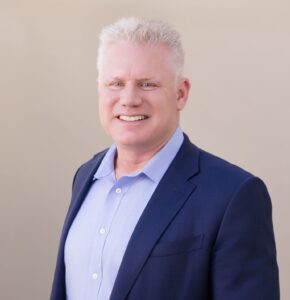
Amel: Yeah, thank you so much for this, uh, for this warm introduction. Uh, so my name is Amel Havkic. Uh, like you mentioned, I'm the, uh, founder of EvoMed Consulting. Um, I'm still a practicing physician, uh, but also an advisor in MedTech. Um, I've been doing this now for, uh, quite a few years.
Um, in my work, I've developed a framework, the StarMap framework, which, uh, pretty much helps, um, companies with clinical adoption. Uh, for that, uh, we won, uh, multiple awards in the past years. Uh, one was, uh, best market access consultancy in MedTech 2025. And personally, in Dubai now, uh, this year, in February, uh, best rising star of the industry.
And, um, my idea is actually to help create, uh, a world where no patient is left behind and, um, every patient gets the best care imaginable, independent of where they are and, uh, how much money they have to spend. Um, which is ultimately, uh, what I'm trying to achieve with the EvoMed.
Christian: To that number of 75% fail or three out of four. Is there like one or two things that are the primary drivers in that failure rate from your experience because I know you have this framework and you help companies not fail in med tech, but what what are a couple of the main things that you've noticed that people are not looking at properly or assessing the risk properly, or maybe they just have a blind spot that is resulting in that high failure rate?
Amel: I think the, the term blind spot, uh, fits it very good. We actually did some, uh, did some research on this. We got, we gathered some data. Um, and we talk with more than 150 innovators in med tech on their challenges and what the actual reasons is, uh, are. And the number one reason with roughly 40% was actually clinical adoption.
So, uh, we think of this, um, problem with the, uh, with med tech, with failing, with having a sustainable business as something which has a goal. But as you, uh, rightfully so mentioned, it's difficult in business because it never ends. It just goes on and goes on and goes on. And I think
Christian: There's no finish line. That's right.
Amel: Exactly. And the oldest business, um, that we have today is in Japan. It's, uh, uh, they're, uh, building temples, and I think it's over 1,300 years old or something like that. So, crazy number. And that's exactly the thing. Um, because, uh, as startups, we come from, from the other side, right? Uh, a startup usually wants to build something, imagines a finish line, um, then, uh, in trying to build that house, like unlimited amount of options to go to that specific place. Um, my experience was exactly the opposite. I'm still practicing, so I was using the solutions who made it to the bedside basically every day.
And ultimately I had the benefit of hindsight. I was able to look at what worked and what didn't and basically backwards engineer the process. And a few things stood out. Um, one thing is that we're talking, when we talk med tech, we're usually talking about, um, people who are trying to run a business with a technical team, uh, solving a medical problem, um, in a, in an environment which is hugely complex and has so many stakeholders involved. So already in that sentence, you can see how complex navigating this system is. Um, and ultimately, so clinical adoption is the first thing to consider. Um, the biggest failure rate, but usually the latest one or the last one on the radar. The second we have with roughly 30% is, um, fundability, in fact. So, yeah, that would be some of the, uh, some of the challenges that you need to, uh, go through in order to, um, create and build a sustainable business model in MedTech, um, leading to the 75% failure rate and blind spots you mentioned.
Christian: The clinical adoption, uh, because I've heard this before from other people. What is the reason that that's the biggest, I guess, contributing factor to a failure? It seems to me, and this might be my own naivety, that if I'm going to develop a product, the first thing I should look at is how my end user or my client or my customer is going to use that product in their environment. And I realize, um, there's a bias like you mentioned a couple of biases. You can have the best technology ever, but if it can't be easily inserted into a clinical workflow, uh, then it's going to be a problem. So how do, how do we address that? Because I think there's a couple of things I've noticed. Uh, my wife used to be a nurse, and she would talk about these great technologies that were brought to the hospital that everybody loved.
But for some reason, they never made it into the hospital even though they were really good because there's some politics, there's the workflow, there's the old way of doing things. So is it really like the odds are against you, or like what, what kind of a med tech innovator do to help with that clinical workflow understanding and, you know, be better at that area?
Amel: Um, so you mentioned something, a very important there. So we usually try to start with a relevant problem that we want to solve. Um, problem is that, uh, depending on, on how you see that clinical adoption or where you set the mark, um, there can be many different stakeholders involved. So there is many different problems to solve by only one solution in order to reach, um, sustainable clinical adoption. So think of it like this. You have a founder, uh, which found a medical problem, developed a solution for, for ease of thinking about it, let it be, uh, a software device, which detects certain changes in, uh, a radiological image. Um, the doctors might love it, but the moment, um, that you don't have, uh, a way of getting that reimbursed, the moment that you don't have a way of or you don't know how to communicate that properly to the management of the hospital, or the moment that you have, um, IT, uh, putting in a veto because for cybersecurity reasons, for instance, um, it might break their whole, uh, tech stack. So already you see, there's a lot of different people involved into just making that one decision.
Um, and in fact, um, what we were able to, to, to synthesize was not just one factor, but it's seven factors in total, uh, going through what we mentioned just now, the specialization, so solving a specific clinical problem, uh, through workflow alignment, so making this feel natural to the user. Uh, but then you go down to predictability of services, so it needs to improve the, the predictability of the, um, healthcare delivery, um, patient input, think patient input versus patient output. Um, you need, the moment that you're that specialized, you need to, um, fit the ecosystem and cooperate with the EHR, um, with other users maybe who don't have the same access to the tech stack as whoever uses it in the clinic, goes through implementation friction to some, uh, sustainability cluster, I call it, it's ambulantization and digitalization.
So, um, overall pulls and political needs and wants. Then a very important thing, which I mentioned just now, with the reimbursement, the economic viability. Do you with your solution create something which increases the economic viability, so betters the, ultimately the, the ROI, the economic outcome of your user and, um, then by the default, also your own, if you manage to create, uh, proper value. And then, of course, increase quality of care.
And it's not just simple points that you can put a check box on, but all of them interact and move each other. There's an implementation friction in the middle, uh, which stops good solutions from being implemented. And that can be politics, um, that can be old way of doing things because healthcare has evolved, um, different from the typical Silicon Valley thinking. It's been involved, evolved, it's evolved as a very inert system, which number one, um, number one credo is to avoid harm.
So naturally, um, the moment that you introduce something new, you introduce new variables. Um, all of those can lead to a critical failure. And in MedTech, in healthcare, critical failure is not an app that you uninstall. Uh, churn rate, um, worst case, it is a patient life, which is at stake. Um, and those are all of the reasons why, uh, clinical adoption is not so easily achieved, besides the fact that up until now, uh, not many people talk about clinical adoption, think, okay, it's, uh, it's a clinical study that I run, the moment that I prove that I am at least safe, so I get approval, FDA and I can improve some outcomes, that's it.
But the reality, the real life reality is much more complex than that.
Christian: It's also the, the training involved because if you got the nurses and the physicians, they have to be trained on this new tool, this new technology, and there's a lot of time and effort to that. Uh, because I know there's a lot of, a lot of scenarios where people say, if there's a vulnerability with a device from a cybersecurity perspective, let's just, uh, recall it and replace it. But that, it seems simple, but if you've got a whole workforce trained on a specific medical device or medical technology, it's not as simple as just replacing it and, and with something new because you have to train everybody on that new device. And that is a massive undertaking and there's risk with that. Like you talked about risk to the patient. if someone doesn't know how to use the device properly, there's resistance to the new technology. There's, I mean, there's a whole bunch of factors involved, really.
Amel: You described it perfectly. The problem is that most, so imagine an environment where you develop a solution. Um, it's pretty much a lab environment. And very few times does someone think while developing a solution of all of those ripple effects that you mentioned and the impact in the workflow, the friction it causes downstream. And, um, even if you have, uh, pilots, you run pilots, clinical studies, you have your KOLs and asking for their opinion, but, um, there's something that I like to call the KOL trap. You have with a KOL or a pilot, um, you have basically the perfect environment made. It's like a lab environment just like in the clinic.
You have the pilot has your full support. If something breaks, he calls you up. You jump up, you fix it right away. If you have, um, any questions, there's a hotline where they can, uh, call up. The KOL, um, most probably, because he is, uh, so renowned and, and in such a position, uh, does little else than just like take care of patients with exactly the problem that you're trying to solve, and you cannot just translate it one to one into all other, um, environments, uh, which there are. So even, um, even between the same units, certain things are done different. They're done different in Germany as they're done in the US. Um, although we're talking top notch healthcare systems, uh, there's still some changes, and those changes can have profound impact on the, on the patient and the patient safety. So all of these make it extremely important to make um, solutions usable in as natural a way as possible. Ultimately, the reason the iPhone is, uh, is, um, predominant or smartphones in general, because it was a much more natural way of doing things. Um, and is, um, also the reason why, why I advocate for smart solutions, um, which put the functionality that you need at that moment, which you also mentioned, a click or two away, or have smart alarms to prompt the user, ah, look, um, perhaps you want to order now this lab or this exam, if you now look at this and, um, see that there's a problem and you confirmed it.
Um, so we need to get our thinking away from, uh, screen, uh, paper on screen. So the classic, um, I have a form, and I'm going to digitize it, and now it's going to be the exact same form on screen. But what we actually need is like systems which, which are, um, legitimate clinical support systems. So support the natural decision making process of a human. And ultimately, uh, we're still human. And that is a factor which by all of the technological, uh, advances still need to be taken into account.
Christian: Yeah, there's a lot to consider because, uh, I work in this industry from a, you know, cybersecurity perspective and a technical perspective and my background is not in healthcare. I'm not a physician or a doctor or a nurse or anything. Um, but my wife talks about terms all the time, like alarm fatigue and things like, when she says it, it makes sense, but she always talks about like, well, if we implement this other device, that it's beeping all the time, at some point, people just stop, start ignoring the beeps because there's so many going off all the time. And I never thought about that, but like, in a critical care unit, like these things are going on and you know, like you said, a KOL or key opinion leader may operate in a very specific, uh, pristine environment versus like the chaotic environment it seems like my wife worked at. Um, and I know there's a different, a lot of different settings, but I think that's an important part of like, where is your device going to be used and what is the, the reality of how it's going to be used and what's the, the real situation like? It can't be set up for a, I guess, a simulator where only one thing is going wrong, and it needs to be set up to how it's gonna operate in reality, really.
Amel: That's one thing that I would, uh, that that I would love to know from you. So, first time, so you come from a cybersecurity perspective, but the first time that, um, the, the whole healthcare, uh, setting that you were exposed to the whole healthcare setting, what was the, um, feeling like for you? I mean, was there, you mentioned one of the thing that you were not aware of, but are there more? Like, I imagine when I, uh, when I have a friend, we have, obviously, we used AI to take this StarMap framework and create StarMap OS, which is a full operating system. Um, but then he tells me like certain things that, which I don't even understand, and for him, it's like the, the most natural thing in the world. So, uh, what I would like to, to, to hear from you, and I'm dying to, to ask you this in a while, how did that feel for you?
Christian: Well, I come from a background of cyber warfare, like in the military, and then hacking or penetration testing. So before I got into medical devices, I did cybersecurity for commercial aircraft to make sure somebody couldn't hack into a commercial aircraft and crash it and kill everybody on the plane. Because for a while there was supposedly this threat, somebody could plug into the USB port on the inflight entertainment system and with their laptop and control the engines and things like that. So it was taken very seriously and, you know, my, part of my job was to make sure that that couldn't happen. And then I started, uh, with medical devices in 2014, my first cybersecurity company.
And some of the devices we worked on and what I started learning about was, was kind of mind blowing because I remember my grandmother when she died, she was hooked up to a drug infusion pump. And that specific model of the drug infusion pump had vulnerabilities where somebody could wirelessly connect to it and increase the flow rate of whatever drug was on there or decrease it. They could basically control the pump remotely. And when I started thinking about it in the context of people I know and how many devices there are at a hospital, and then a hospital bed on average, I think there's 14 now. And I know a lot of those are vulnerable, it's, it's a big deal. And I didn't realize the magnitude of the problem because we tend to, people tend to think, they don't think about things until it's a problem, really.
And I think in MedTech, it's now becoming pretty aware with cybersecurity, like it was with commercial aircraft, that it's a major concern. I know the FDA, MDR, PMDA, whatever regulatory authority is really considering cybersecurity as a serious concern today. And it's catching a lot of, um, MedTech innovators off guard. Like you say, the clinical adoption is a big driver for that failure rate. From what we see, we see a lot of submissions get rejected or have deficiencies because of cybersecurity, uh, because they didn't consider cybersecurity early on in the design phase. They're trying to like add it towards the end. Like today, uh, after this call, I've got a two calls with prospects that have received deficiencies from the FDA.
And now they need to have a game plan and how to fix it because otherwise their device may not make it to market. And this is becoming several times a week. We have calls with people that have deficiencies and they need a plan, and they have 180, 180 days to get their device, um, to get everything addressed. And it's a very, super stressful situation for them.
Amel: I think it makes a lot of sense. Um, obviously, as doctors, we are used to having, um, like a, I would say, like a lower life quality because of the shifts and on calls and understaffing. Um, and everything that you, that you also mentioned, um, that your wife was going through, and, um, with that being the case, what we ultimately want to see in this world are more devices which allow us to profit from the same things which other people profit, which is, uh, remote, uh, home, home office, remote work, um, travel, work and travel and so on. And I can definitely see how, um, someone would, um, develop a solution which enables that, and all the doctors are saying, oh, this is awesome.
Um, but just giving them the ability to, to control a certain function of, of the drug pump, as you said, or a respirator or a monitor, even just like shifting the, the, the alarm, um, barriers up or down in such a way, um, that it doesn't give an alarm, if someone has a malicious intent, he can definitely misuse this. And this is, this was part of the work that I was doing for a client of ours where we were, um, trying to take, um, we were implementing the, um, clinical, clinical safety into the digital solutions and remote solutions, and, um, it's just like you say. I mean, you don't think that things will go wrong. Um, but, uh, it's, uh, Murphy's Law, if they, if they can go wrong, they will go wrong, and if someone has enough criminal energy behind it, um, they will try to find a way, even if it's like just extorting people for money or worse motivations.
And that's why I think that, um, in order for, for a company to succeed sustainably, to have a sustainable business and in such a way to reach a wide clinical adoption, um, the, the whole cybersecurity part because, uh, let's face it, all of the, um, devices which are now coming online, they're somehow connected to a computer. We're not using pen and paper anymore, so, so, um, all of these concerns are legitimate. And, um, you know best that with just like changing one functionality, you can perhaps break the whole system if you make it, you can make everything safe enough, just like gluing the ports shut, right? But you cannot, uh, but you cannot use, use the device anymore.
So, um, it's a, I think it's a balance which needs to be found, and I think that's why, what you are doing in specifically, raising, um, the awareness of cybersecurity in MedTech is an extremely, uh, relevant field for me and all of my colleagues and everyone who's doing it. So we can focus on other things and don't have to, to, now on top of everything, think about, um, all of those risks associated.
Christian: As you were talking, I was thinking about this raising awareness. Like you're trying to raise the awareness on, um, clinical adoption and reimbursement. I'm trying to raise awareness on cybersecurity in the industry. Other people are trying to raise the awareness on regulatory strategy and on how to get the right investment. And, you know, I was just thinking back to what Melissa said about alarm fatigue. If I'm like a innovator, and I'm hearing all these people telling me I need to be concerned about this, and this, and this, and this, and this, at some point I'm probably like tuning out, right? It's a lot. It's a, it's a, you know, like you said, you compared it to Silicon Valley earlier. In Silicon Valley, I can use, you know, Lovable.ai or some AI web platform, build a web app and have it up tomorrow and try to generate revenue. But I certainly can't do that at MedTech.
And I got all these people telling me what I should be concerned about. It's a, it's a massive challenge, I think, for an innovator. And we work with, um, innovators, uh, through MedTech Innovator. We're, we're a mentor. Um, and we try to help them, but it, it is a massive undertaking.
Amel: I think it's probably for the same reason, uh, it is difficult to get, um, a clinician or anyone really, um, into a new, using a new workflow or, uh, getting used to do things a different way, going back to the QWERTY keyboard, right? Um, point being that, um, they need to be aware of it, but they don't have to do it on their own. And I think that is the, that is the big difference. And, uh, you are way further in the entrepreneurial journey than I am. And we had this discussion, I think in Dubai it was. Um, you need to get the right people on board. You can impossibly keep everything on top of mind. Uh, but you should have something like ideally, not in your mind, but a mind map somewhere, um, which can help you navigate. Um, this is ultimately the idea behind the StarMap, to be able to map out all of those, um, risks and friction points and things you should consider positively as well as negatively, to decrease the mental load, um, something that also in should be implemented pretty much in every MedTech solution.
But I think the, the way to go is, obviously all of us are biased. Brings us back to the beginning of our conversation now. Um, all of us have our biases, and if I'm concerned all day about clinical adoption and you about cybersecurity, um, this will make you an expert in your field. Um, but also everything that that you get asked, you will see through this lens, at least I do. Um, with the ultimate effect that whoever we talk to and whoever we advise, the coachable founder, ideally, um, they accept, they, they have our or we have their trust and they accept our advice because without that, um, things become difficult. And ultimately it is a team sport. Um, and I think building out your team and building out your team of advisors and also knowing who to work with on specific topics, um, is a skill that every entrepreneur needs to master, uh, if he doesn't want to be caught in his own business as, uh, the cheapest, uh, employee there is, does everything for the same amount of money, no?
Christian: Yeah. It's like you trade your, uh, nine to five for a five to nine. Basically. And your hourly rate goes down because you're working like I have been for a while, like 16 hours a day, I felt like, including the weekends. Um, but that is a, that is a super hard skill to find the right team and to know you're making the right decision and how do you make that decision on something you don't, you know little about? Like I always think about about it, like if someone is trying to choose my firm for cybersecurity for their medical device versus some other company, like what is it like for them? Like we can say we're great, we have all this experience, but everybody else probably says the same thing. So I always try to put myself in their shoes and think, how can I show up with certainty and confidence and, and empathy and give them the assurance that we can take care of their problem for them. Um, but my, you know, my competitors are doing the same thing. And it's a difficult position to be in as a as a founder to to choose the right team like you said, I don't know if you have any tips for that. Or that's in your, uh, your star map. I was looking at a little bit here while we're chatting. Um, you got cooperation and ecosystem fit there at the top, so maybe it's in there a little bit.
Amel: We have, like certain things are not like explicit when you look at it from the outside. Uh, but we do have, um, an implementation friction. We have a modified Ishikawa method, which has the 5M or 6M method, depending on which one you want to use, and men are always, men or, uh, it's one of the M's, or humans, uh, is one of the, the failure points. I think it is this difficult because no one teaches us how to do it.
In school, at least the way it looks right now, um, we are thought to be skilled labor, no? Um, we get information, this information we use to get a specific task done. Um, and it is a completely different game than, um, being creative because when building a company, you're creating something out of nothing. For that, you need a completely different skill set. Um, a thing which, uh, which which stood out to me as I was recently, um, having a, um, discussion with a very good friend of mine. Um, and he was saying, okay, always the same type of, of people find him and request his services. Uh, people who he doesn't resonate too much, and they actually just want the outcome and not the process that they need to understand to reach the outcome.
And in the discussion, I came up with the with the point that I had a different type of experience. My experience was that people who are talking to me and ultimately working with me are people who resonate with the, with the things that I resonate with. And I think the hack in it, uh, hack to it is just being authentic. If you are your authentic self and, um, not hide behind a shell and communicate your values and everyone knows, okay, um, this guy, so me, uh, he's a family father and it's a very high value, then this will resonate with the same type of people. So you will build your team. It will not be, so competitor A that you mentioned, um, might claim the same things, but the human factor will be different. He will behave different, he will, um, handle certain things differently, and that's where I think being human comes in and that's why it's so important to just be yourself and surround yourself with people who you genuinely like, as simple as it sounds. And, um, if there is something inside of you raising a red flag and warning you about something, I think it's good to listen to it. At least that was my experience. Whenever I had a funny feeling when I was talking to someone, it was always better that I should have listened to it. But then you try to convince yourself otherwise.
Christian: I agree. I, I think, um, I'm authentic. I don't try to pretend I'm somebody I'm not. Uh, Melissa is, a lot of people say that when they see us at events that we're just who we are. We don't, we're not putting any auras or anything and maybe a lot of people do. I don't know why you would. Uh, but what you said about that funny feeling. Uh, I'm trying to get better at that. Whenever I've had that feeling show up with a prospect, somebody on my team, anything, it's never been wrong.
But I have, like what you said, I've tried to rationalize away like, oh, that person, I'll give them a second chance on my team. Even though everything, every fiber of my being is saying just get rid of them. We're not aligned. I'll like logically and emotionally argue against myself and it's never worked. So I'm trying to get better at when that feeling shows up, paying attention to it. Even with prospects because on the sales side, like you said, not every sale is a good sale. There's some prospects, if they are this difficult and we're this out of alignment, if we close that deal, it's gonna be nothing but friction. You talk about friction quite a bit. And negative cash flow because my team is going to have to spend three times the amount of time working with this prospect because they want to do things differently than we do them and all these other issues. So, I think those are very important things to consider as well, especially, you know, as an entrepreneur running a business.
Amel: Yeah, worst case you need to hire even a psychologist to like treat the trauma of your whole team from that one client.
Christian: You know, I've studied like neurolinguistic programming. I've tried to get really good at, um, understanding people and building teams and all that, but it's, it's always a challenge. There's always something new to learn and you know, you got to look at yourself too. I have to look at myself in the mirror like what am I doing or saying that I'm projecting that is coming back to me because ultimately, like you said, the lens we look through the world, not just from a cybersecurity perspective, but from our own model of the world is what we see and how we, uh, put a slant on things and it's not always accurate. We got to change inside and change that lens.
Amel: But you're giving gold here again. I mean, um, being aware of your own bias, um, is what prevents you ultimately of getting blindsided by it. And this is exactly what you described, just like trying to. And I, and it, I think it's a journey. It's not like anyone has, um, okay, perhaps some people have a third eye. Um, but I know I don't. And it is a journey. You learn something new every time. Um, but I think that it is a good thing that specifically in the age of AI and where everything gets more digital and everything gets more automated, um, that we trust in our instincts and we trust in our human side. And I do think that the more AI takes over other tasks, the more being human will become a superpower.
Christian: Yeah, I agree. Well, we're coming up here on time. I'd like to ask for maybe some key takeaways or the departing words of wisdom, last minute words of wisdom. So what what do you got for our listeners?
Amel: I think being aware of your own biases is a good closing word. We all have them and we don't have to close them ourselves. We're in a we're always working with others. We are always part of a of a bigger picture of a legacy that we want to leave behind. Um, specifically on all of the clinical adoption topics, um, my, uh, book on this topic will be launching in Malta this, uh, November. So in just a few months time. Um, so whoever wants a deep dive, um, is more than welcome, uh, to take a look in there. And there I share, also very authentically, as much as, uh, as I could, uh, in writing it down, my thoughts and all of these topics.
Christian: That's awesome. I have to get a signed copy. I was hoping to have my book done by Malta, but I'm way behind on my
Amel: Yeah, what is it, second, third?
Christian: Yeah, it'll be my third book, but, uh, it's on medical device cybersecurity, but, um, I have another book I'm almost done with, too, but
Amel: But that one is on philosophy.
Christian: Yeah. It's not easy writing a book. It takes a lot of time. Cool. I think, uh, for me, the key takeaway is, I think awareness is important, even from like clinical adoption or knowing what to do, but I think it has to be actionable awareness. A lot of us are aware, but we don't do anything about it. So we have to translate that awareness into some sort of action, even if it's a daily habit or just a small change in our behavior, that action driven by that awareness can facilitate our success.
Amel: Great words of wisdom.
Christian: Awesome. Well, thanks so much, uh, Amel, for being a guest. Uh, we appreciate you coming on the show. And I hope everyone found value in this episode, and we hope to see you on the next one.
Amel: Thank you so much.
Christian: And we'll see you in Malta if I don't see you before then.
Amel: Thank you so much. Looking forward.