Many MedTech startups fail because their marketing claims are not sufficiently backed by clinical evidence
which is a major red flag for investors.
A common pitfall for MedTech companies is a lack of "narrative coherence," where they present...
A common pitfall for MedTech companies is a lack of "narrative coherence," where they present different and often conflicting stories to various audiences like investors, customers, and regulatory bodies.
Startups often suffer from a lack of "buyer clarity," attempting to sell to anyone who shows...
Startups often suffer from a lack of "buyer clarity," attempting to sell to anyone who shows interest instead of focusing on a well-defined ideal customer profile.
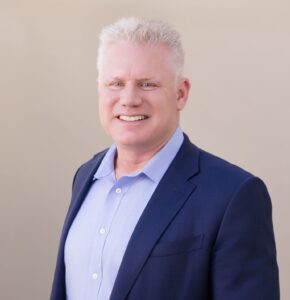
Ryan Roghaar's consultancy, ROG Health
uses a "pre-diligence" framework to identify critical gaps in strategy, messaging, and evidence before companies seek funding.
Medical device cybersecurity is not just about data protection but is a critical patient safety issue
as vulnerabilities can be exploited to cause direct physical harm.
As technology like AI becomes more integrated into MedTech
cybersecurity measures must evolve at the same rapid pace to counter new and sophisticated threats.
For a MedTech company, having a unified "North Star"—a core
consistent message across all platforms and for all audiences—is essential for building trust and securing investment.
It is often more beneficial for a MedTech startup to have no website than to have a sloppy
unprofessional one, as it can undermine credibility with potential partners and investors.
Episode Summary
In this episode of The Med Device Cyber Podcast, host Christian Espinosa is joined by guest Ryan Roghaar, the owner of ROG Health, a consultancy specializing in the MedTech industry. Ryan shares his journey from running a general-purpose advertising agency that served a wide range of clients—from automotive to insurance—to pivoting his entire business to focus exclusively on medical technology. This strategic shift was driven by his work with a major MedTech client, which illuminated the unique and complex challenges startups in this highly regulated space face when trying to commercialize their products, scale their operations, and secure funding.
The core of the discussion centers on the critical failures Ryan frequently observes in MedTech startups. He introduces his company's concept of "pre-diligence," an analytical framework designed to identify and address these issues before they derail a company's progress. Ryan outlines three primary pain points: a lack of narrative coherence, where a company tells different, often conflicting, stories to investors, customers, and regulatory bodies; a lack of buyer clarity, which results in a scattered and ineffective marketing approach; and, most critically, making marketing claims that outpace the available clinical evidence. Ryan highlights the severity of this last point by revealing that in a recent cohort his company analyzed, five out of seven startups seeking major funding rounds of up to $25 million were making claims they could not substantiate with their data, a major red flag for investors.
Christian Espinosa skillfully ties these commercialization challenges back to the podcast's central theme of cybersecurity. He provides a stark example of a hackable implantable neurostimulator, where a vulnerability could allow an attacker to overstimulate a patient's brain, demonstrating that MedTech security is a matter of patient safety, not just data privacy. Ryan acknowledges that his previous conversation with Christian was an eye-opener, making him realize that the concept of "hacking" in this field extends beyond financial theft to direct physical harm. Consequently, ROG Health now incorporates cybersecurity readiness into its evaluation framework. The dialogue emphasizes that as medical devices become more sophisticated and integrated with AI, the associated security risks also escalate, making a robust and verifiable narrative—backed by both solid evidence and strong security—essential for any MedTech company aiming for long-term success.
Frequently Asked Questions
Quick answers drawn from this episode.
In this episode of The Med Device Cyber Podcast, host Christian Espinosa is joined by guest Ryan Roghaar, the owner of ROG Health, a consultancy specializing in the MedTech industry.
Many MedTech startups fail because their marketing claims are not sufficiently backed by clinical evidence, which is a major red flag for investors. A common pitfall for MedTech companies is a lack of "narrative coherence," where they present different and often conflicting stories to various audiences like investors, customers, and regulatory bodies....
This strategic shift was driven by his work with a major MedTech client, which illuminated the unique and complex challenges startups in this highly regulated space face when trying to commercialize their products, scale their operations, and secure funding. It's most useful for medical device manufacturers, cybersecurity engineers,...
Many MedTech startups fail because their marketing claims are not sufficiently backed by clinical evidence, which is a major red flag for investors.
Share this episode
Pre-fills with: "Many MedTech startups fail because their marketing claims are not sufficiently backed by clinical evidence, which is a major red flag for investors."
Why can a MedTech company have promising technology, a strong team and investor interest, yet still lose momentum when it matters most? Ryan Roghaar joins Christian Espinosa to examine the commercialization gaps that can quietly weaken a medical device company long before the technology itself becomes the problem. Ryan explains why companies often move through fundraising, regulatory strategy, sales and market entry in the wrong sequence, and why inconsistencies between a pitch deck, website, evidence and buyer messaging can immediately create doubt. The conversation explores what happens when claims outpace evidence, why MedTech companies struggle to define exactly who they are selling to, and how cybersecurity and AI are adding entirely new layers of risk to commercialization. In This Episode: 07:43 Why Ryan moved into MedTech 10:32 Moving from marketing agency to MedTech consultancy 11:32 Why devices fail outside the technology itself 12:41 Does MedTech commercialization follow a sequence? 16:08 The evidence gap inside MedTech companies 17:10 How investors pressure-test startups 19:55 When a company tells four different stories 23:36 Can cybersecurity become a commercial differentiator? 24:11 Why medical device hacking feels different 27:24 Cybersecurity risks from MRIs to brain implants 32:21 The three biggest commercialization gaps Ryan is seeing 35:57 Why unclear buyers dilute your message 39:08 The pressure to take the wrong customer 42:47 Ryan’s three key takeaways for MedTech companies Check out Ryan Roghaar’s LinkedIn here: https://www.linkedin.com/in/ryanroghaar/ The Med Device Cyber Podcast is brought to you by Blue Goat Cyber, cybersecurity experts providing essential security solutions for the medical device industry. Learn more by visiting https://bluegoatcyber.com. If you’re interested in our services or partnering with us, schedule a Discovery Session: https://go.bluegoatcyber.com/meetings/blue-goat-cyber/discovery-session Christian Espinosa is the CEO and founder of Blue Goat Cyber. Christian Espinosa on LinkedIn: https://www.linkedin.com/in/christianespinosa/ Blue Goat Cyber on LinkedIn: https://www.linkedin.com/company/blue-goat-cyber/ Blue Goat Cyber on Instagram: https://www.instagram.com/bluegoatcyber/ Blue Goat Cyber on Facebook: https://www.facebook.com/bluegoatcyber/ Blue Goat Cyber on YouTube: https://www.youtube.com/@BlueGoatCyber/?sub_confirmation=1* Download MP3 — full interview
Christian: We work with neurostimulators. It's an implantable in your brain that is powered by a wand and if there's a vulnerability with the way it's powered, it could overstimulate your brain and cause problems that way too.
Ryan: And in our last cohort, we had five out of the seven that we ran our analysis on that basically were making claims that they couldn't back up. These are guys going for $25 million rounds and they're still making claims that they don't actually have the evidence to back up. When you think of hacking and you think of stuff like this, you think of computers and you think of, you know, somebody got into my bank account or whatever. Like that's what you think of with hacking. I don't think you think of somebody took over the device that's operating on me. I guess you don't think about it or at least I certainly didn't think about it in terms of med device.
Christian: Hi, welcome back to another episode of the Med Device Cyber Podcast. Today we have a a special guest coming to us from Salt Lake City area, a heavy metal fan, a fellow metal lover.
And I used to be a guest on his podcast. I was at one point in time. So now he's a guest on our podcast. So happy to introduce you to Ryan Roghaar who has a couple things going on. You have a podcast, you have a book you're working on and you have a company that helps with MedTech as well.
Ryan: Yeah, thanks for having me Christian. It's awesome to reconnect. Obviously, yeah, we we had you on Egg's podcast some time ago and I was grateful to make your acquaintance then. Um at the time it was funny because we weren't actually really that focused on MedTech at the time.
Uh we were more like an all purpose, you know, all people, all things kind of ad agency and we worked on, you know, a broad range of clients from everything from consumer goods and apparel to automotive and uh a lot of work in the insurance industry around the big, you know, sort of national health insurers.
And uh it wasn't until the first of this year, 2026 that we made the pivot into MedTech. Uh we sort of followed our one of our primary clients into the industry.
And uh then in doing so, I kind of looked back at, you know, old podcast guests and you know, looking for anywhere I could find en roads into the industry because I just, I mean, we knew our clients, but we didn't know people outside of that. And so uh it was great to go back through the old podcast and stuff and find your name in there, obviously as somebody who's pretty influential in the space and moving and shaking.
And uh so it gave me the kind of the uh I guess the need or the interest to to reconnect and and uh and maybe bond over this industry together. So it's been great catching back up with you and uh the opportunity to have a call with your wife as well and just a couple of people really excited about this uh about this industry and and everything else. So I'm excited to be back in the uh in the loop with you.
Christian: Awesome. Yeah, me too. It's always great to talk to someone that likes heavy metal also. Although this year I had some uh work issues arise and I had to miss Vocon. It would have been my first Vocon Open Air. I was supposed to be there a few weeks ago and uh yeah, I didn't go. And ironically I met um Rob Halford in the airport in February in London and he was on the same the same plane as me.
So we had a good chat and I said, hey, I'll see you at the Vocon because they're headlining for Vocon. Um but I, I missed it. So hopefully next year they'll still be headlining.
Ryan: Yeah, no, unfortunately, I, I God, I don't think I've been to a show this summer. I, I don't know how I've managed it. I had so many on the list and then just, you know, between work and life and everything else, it's just hasn't worked out. So, but uh, I've been noticing too lately, my playlist has taken kind of a nineties turn and it's going back to some of these other guys. Not heavy, heavy metal, but um, it'd be I guess kind of more like the new metal types like Anberlin and some of these kind of bands that I've just like turned back on to.
And uh so it's been kind of fun, you know, or reminiscing a little bit about those nineties, 2000s bands that I used to like too. So it's been a fun time in uh in music. But yeah, I, I've missed out on the live performances this summer. I did see some uh video from Hellfest though and that's one I'm gonna have to make one of these years.
Christian: That's on my list as well. Yeah. Uh, hopefully this should, I did buy tickets to Metallica at the sphere. I got two sets of tickets for two different shows. So.
Ryan: Yeah, that's pretty incredible. Yeah, I saw the uh the presales go up and everything. I was a little too slow, but.
Christian: The presales, I was on an airplane and I tried to buy it and I was like number 300,000 out of, you know, in the queue and there were only like 30,000 tickets or something. So I had to find this backdoor where I bought a package where it includes the hotel room and then a, you know, a nice ticket and all that. So I went that route but it worked out.
Ryan: Yeah, yeah, that's the move. No, I'm super jealous. That'll be great though. We'll have to circle back and catch up on it because uh I'm excited to hear how those go. I uh was showing last night, we were watching a live show. I mean it was 15 years ago, the show we were playing. God, I wish I could remember where they were playing at. Oh, Mexico City, we were watching a live concert here, me and me and my boys. And uh I was playing just uh it was Enter Sandman from back then.
And it's funny because my kids were like, God, how old are these guys? They look old then. But uh I was like, they're not that old, they're fine. And so, but um but no, they they were so they're just so great and some of that. I mean the I when I very first got into, I guess sort of into music. I mean, I always like to music, but the first CDs that I ever got, I got from my dad for my birthday and it was the Metallica, the Black album and then this guy uh Snow 12 inches of snow was the album and then another rapper guy named Paperboy.
But um but anyway, I got those three, those were the first three CDs I ever owned. So uh so I wore out my black album. I was pretty jacked on that one.
Christian: Yeah. Black album was a, was a good one. I think the first one I ever got was maybe Kill 'Em All. I'm a little bit older than you. So I was around in high school when they first started coming out. Metallica did.
Ryan: Yeah. No, I love that. Yeah, they were so good and and even now, I mean, it all holds up pretty well. Those guys are just incredible. They're one of the, I think when I see those dudes and I mean, I've heard some of the backstories, it's funny you mention running into Halford uh at the airport. I ran into Lars Ulrich on the streets of LA, he was out running.
Christian: Oh, okay. I heard he goes running pretty much every city he travels to, is his like routine.
Ryan: Yeah, yeah. So I saw him running downtown. I have a friend that used to live down there and so we were out just grabbing coffee and he came running by. So I didn't get a conversation, but I did get a high five as he ran by. So that was, that was good enough for me. But uh but I look at those dudes and I'm just like, they're, they're one of the, I think best examples of bands that have figured out how to just manage fame and manage their career. And I know they've had plenty of ups and downs and I think, you know, that even at this point, they maybe don't travel together and stuff like that. But it's like, you know, they have figured out how to really make a career out of music and uh I think that they're like a great example of, you know, what a lot of these bands could be or should try to be because they're just, I don't know, can't say enough positive things about them.
Christian: Yeah, I, I agree. I was talking to Melissa about one of the concerts I went to uh with Metallica with Guns N' Roses. And uh Guns N' Roses was just was horrible. Axl threw a fit, walked off the stage. And they had a chance to like really like take over the the the show because this was right after James Hetfield burned his arm. It was like in the very first concert. Uh and they had a different, I think the guy from Metal Church was playing guitar. So James Hetfield was just singing and uh Axl Rose just threw a fit and like after Metallica played because they're alternating who was headlining, everybody just left. Nobody stayed stuck around for Axl and Guns N' Roses. So, you know, they, I think like you said, Metallica has done a great job managing the whole team and the whole show and everything. It's for a long, long time.
Ryan: Yeah, well, and like I say, the buyer clarity score across our cohort was the lowest scoring uh dimension across our people in this cohort. But there was another one that's ICP specificity that's literally one point different. Like it's better, but by one point. So it's terrible also. But that notion of ICP specificity is is huge too. And to your point, I mean, narrative coherence, you can have a message that's coherent all the way through, start to finish. You might have a a true north star that you guys are speaking to. But if you're speaking to the wrong person, to your point, you know, you're speaking to, you know, the CMO today instead of, you know, the, the clinician or something. You know, if you have the wrong, even if it's a perfect message, but it's for the wrong audience, then it doesn't do any good either.
And so it's like, so that's sort of I guess, how the difference between the narrative coherence versus the buyer clarity. It's so important to get them both right.
Christian: Coherence and clarity. For sure. Well, thanks so much Ryan for uh joining us today and uh where can the listeners find you? You mentioned like a a couple of different things you have going on. You have a book, we didn't get a chance to talk to dive into too much in your book, maybe next time. Uh ROG Health and then uh your other podcast, your own podcast.
Ryan: Sure. Well, yeah, so basically, once again, my name is Ryan Roghaar. You can catch me, uh, our primary business is ROG Health. It's R O G H E A L T H ROG Health.com. That's our uh MedTech and med device consultancy. We work with companies of all shapes and sizes, so feel free to check us out and take a look. Um the podcast is Eggs, the Podcast, just like it sounds, E G G S, Eggs, the Podcast. And uh you can go back and catch uh Christian here on episode 295 if you're interested in hearing the uh the roots of what became a good conversation.
Christian: Hopefully I was good on that one.
Ryan: It's great. We actually ran it twice. So there's a second uh second airing of that episode because we liked it so much. So uh so anyway, so those are the two big things. Uh I'll just kind of throw it out there quickly. Uh we didn't have much time to talk about it, but the book is uh is called The Lid. It publishes or it'll come out November 3rd. Um we're in the final stages of it right now. So The Lid is basically kind of a hybrid business/mindset book. But it's talking about when you hit sort of these invisible barriers that keep you from progressing to the next level. So as a founder or business owner or whomever, uh at least in my situation, I I would continue to run into these like the way I characterize it is like an invisible barrier that keeps me from moving to from one layer to the next. And uh so that's what we call the lid and basically it's uh it operates on two faces. There's a mindset face and there's a uh structural face to it. So that you don't know what you don't know is one piece. And then on the other side, there's a whole uh sort of infrastructure that's built against you that's built into people. So uh it's really exciting and like I say, it was really to solve my own problems. So I'm excited for people to learn more about that. Um right now you can just check it out. Uh the website will go up in the next week or so. It'll be at ryanroghaar.com/thelid.
Christian: Well, thanks so much and thanks everyone for tuning in and we hope you found value in this episode and we'll see you on the next one.